


Artificial intelligence systems are rapidly evolving from single-response chat interfaces into complex, stateful agents capable of reasoning through multi-step tasks. As enterprises demand automation that spans planning, tool use, memory retention, and iterative feedback, traditional prompt-based approaches are no longer sufficient. This shift has led to the emergence of structured AI agent frameworks such as LangGraph, designed specifically to build reliable, stateful, and multi-step AI systems.
TLDR: AI agent frameworks like LangGraph enable developers to build stateful, multi-step AI systems that can reason, remember context, and execute structured workflows. Unlike simple prompt chains, these frameworks model tasks as graphs with controlled transitions and persistent state. They improve reliability, observability, and scalability in real-world AI deployments. For organizations building production-grade AI agents, such frameworks are becoming critical infrastructure.
The Shift from Stateless Prompts to Stateful Agents
Early large language model (LLM) applications focused primarily on single-turn interactions. A query was sent to the model, and a response was returned. While useful, this approach lacks state management, structured reasoning, and controlled transitions between task phases. As a result, more complex processes—such as research workflows, document analysis pipelines, or automated customer resolution systems—proved difficult to manage reliably.
Stateful AI systems address these limitations by introducing:
- Persistent memory across steps
- Explicit workflow definitions
- Conditional branching
- Tool integration
- Error recovery and re-entry
Rather than treating each interaction as an isolated prompt, agent frameworks model AI behavior as a sequence of structured states and transitions. This approach brings artificial intelligence closer to traditional software engineering disciplines, where control flow and application state are foundational concepts.

What Is LangGraph?
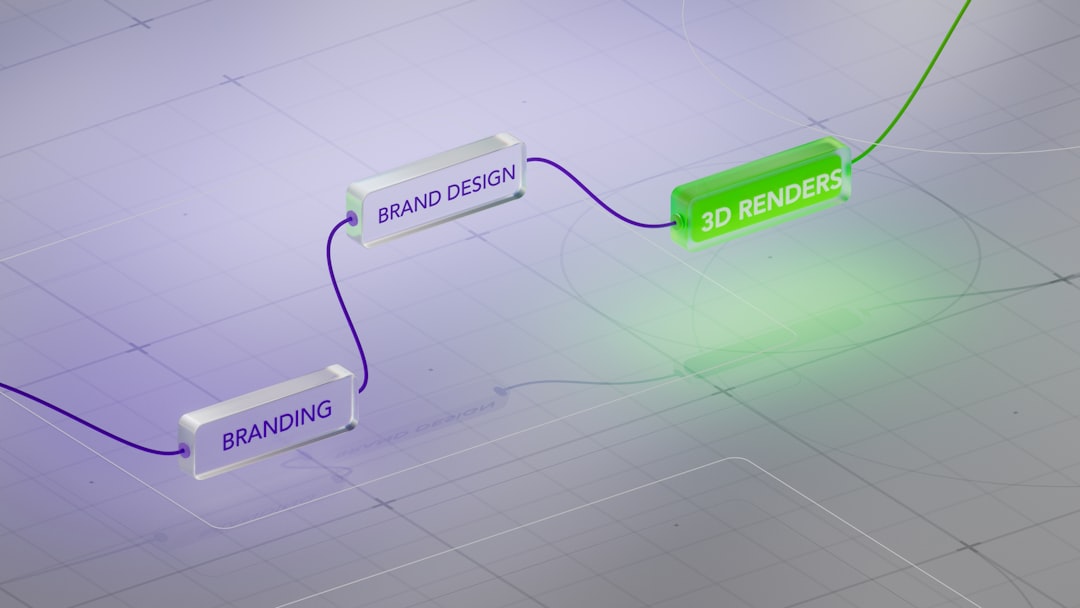
LangGraph is an extension of the LangChain ecosystem designed to build graph-based AI agents. Unlike linear chains of prompts, LangGraph models AI systems as networks of interconnected nodes. Each node represents a function, tool call, or model invocation, and edges define how execution moves between states.
The core philosophy behind LangGraph is simple but powerful: represent AI workflows as graphs to enable predictable, stateful execution.
Key characteristics of LangGraph include:
- Graph-based state management instead of simple sequences
- Explicit control over transitions
- Support for looping and conditional logic
- Persistent execution state
- Human-in-the-loop integration
This structure enables developers to design sophisticated autonomous or semi-autonomous agents that can, for instance, evaluate outputs, retry tasks, branch workflows based on confidence scores, or wait for external input before proceeding.
Why Multi-Step AI Systems Matter
Real-world business problems are rarely solved in one step. Consider examples such as:
- Automated legal document review
- Financial analysis and compliance reporting
- Technical troubleshooting agents
- Enterprise data extraction and categorization
- Customer case escalation systems
Each of these tasks requires multiple stages of reasoning, validation, tool use, and possibly backtracking. A stateless chatbot lacks control structures to manage such complexity efficiently.
Multi-step frameworks help ensure:
- Deterministic execution paths
- Reduced hallucination risk through validation checkpoints
- Clear debugging and observability
- Improved compliance and audit trails
In regulated industries such as healthcare or finance, being able to track how an AI system arrived at a decision is critical. Graph-based state machines provide that visibility.
Core Concepts Behind AI Agent Frameworks
To understand LangGraph and similar frameworks, it is helpful to examine their architectural components.
1. Nodes
Nodes represent units of work. These might include:
- LLM calls
- API integrations
- Database lookups
- Custom Python functions
2. Edges
Edges define the transitions between nodes. They may be linear, conditional, or cyclical. For example, if confidence is below a certain threshold, execution can loop back for refinement.
3. State
State is a structured object that persists across execution steps. Rather than relying solely on prompt history, state allows developers to store variables such as:
- User metadata
- Task progress
- Error flags
- Intermediate results
4. Control Logic
Control logic enables:
- Branching based on evaluation
- Retries with modified inputs
- Escalation to humans
- Graceful failure handling
Comparison of Leading AI Agent Frameworks
LangGraph is not alone in this space. Several frameworks aim to simplify the creation of multi-step AI systems. Below is a structured comparison of prominent tools.
| Framework | Core Paradigm | Strengths | Best Use Case | Complexity Level |
|---|---|---|---|---|
| LangGraph | Graph based state machine | Fine grained control, looping, persistent state | Production multi step enterprise systems | Moderate to High |
| LangChain Agents | Chain based workflows | Fast prototyping, tool integration | Simple to medium complexity agents | Low to Moderate |
| AutoGen | Conversational multi agent systems | Agent collaboration models | Multi agent experimentation | Moderate |
| CrewAI | Role based agent orchestration | Task delegation metaphor | Structured collaborative flows | Low to Moderate |
Among these, LangGraph stands out when strict state tracking and deterministic control flow are required.
Enterprise Benefits of Graph-Based AI Systems
Stateful agent frameworks are increasingly being adopted in large-scale enterprise environments. The reasons are both technical and strategic.
Improved Reliability
By enforcing structured transitions, systems behave more predictably. Failures can be isolated to specific nodes, and retry mechanisms can be implemented without restarting entire workflows.
Auditability and Compliance
State tracking creates a historical record of:
- Inputs received
- Tools called
- Model outputs generated
- Decision branches taken
This level of detail supports internal audits and regulatory reporting.
Human-in-the-Loop Integration
Frameworks like LangGraph allow execution pauses where human review is necessary. Once approved or corrected, workflows resume seamlessly. This hybrid approach balances automation with oversight.
Scalability
Graph-based agents can be expanded modularly. New nodes can be introduced without redesigning the entire system architecture.


Common Implementation Patterns
Organizations deploying stateful AI systems often follow identifiable patterns.
1. Planner-Executor Loop
A planning node determines task breakdown. Executor nodes carry out subtasks. Results are evaluated and, if necessary, revised in iterative loops.
2. Validation Gateways
Critical outputs, such as financial summaries or compliance recommendations, pass through validation nodes that assess factual consistency or policy alignment.
3. Tool-Heavy Orchestration
AI agents integrate with:
- Search engines
- Databases
- Internal APIs
- Document parsers
Graph frameworks centralize this orchestration reliably.
Challenges and Considerations
While powerful, frameworks like LangGraph introduce additional complexity. Teams must consider:
- Design overhead: Graph modeling requires thoughtful planning.
- Debugging sophistication: Multi-node workflows can introduce subtle state errors.
- Operational monitoring: Observability tools are crucial.
- Model reliability limits: Even structured systems still depend on probabilistic models.
Successful implementation often requires collaboration between software engineers, data scientists, and domain experts.
The Future of AI Agent Architectures
The direction of travel is clear: AI systems are becoming more autonomous, more structured, and more integrated into mission-critical processes. Graph-based agent frameworks are a transitional step toward more robust intelligent systems.
Future advancements are likely to include:
- Native visual design tools for agent graphs
- Integrated evaluation and testing suites
- Version-controlled workflow deployments
- Hybrid deterministic and probabilistic orchestration layers
As these frameworks mature, distinctions between traditional backend systems and AI-driven systems may continue to blur.
Conclusion
AI agent frameworks such as LangGraph represent a significant evolution in how intelligent systems are designed and deployed. By modeling workflows as stateful graphs rather than simple prompt chains, they introduce reliability, control, and scalability previously missing in many AI applications.
For organizations moving beyond experimentation into production-grade AI deployment, structured agent frameworks are not merely optional enhancements. They are fast becoming essential infrastructure. The ability to manage state, control transitions, audit decisions, and integrate human oversight distinguishes mature AI systems from fragile prototypes.
As adoption increases, enterprises that embrace these disciplined architectural approaches will be better positioned to build powerful, accountable, and resilient AI systems capable of handling complex multi-step tasks with confidence.