


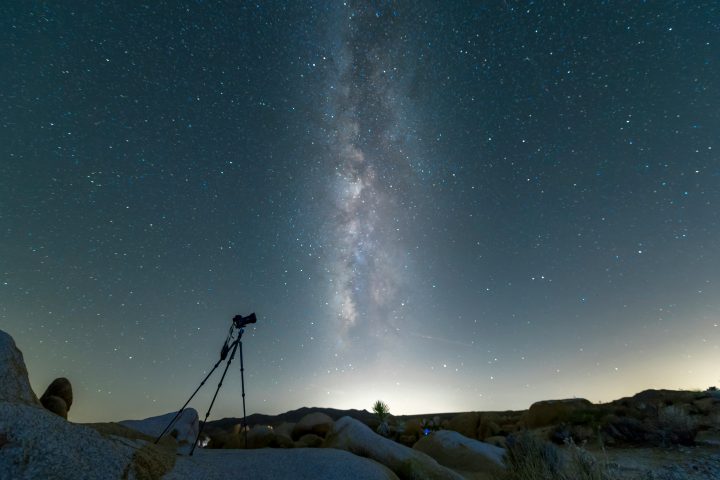
The night sky has captivated humanity for millennia, but the tools of the trade have seen a revolution. The introduction of automated stargazing, spearheaded by modern “smart telescopes,” has shattered the traditional barrier to entry for astronomy. These all-in-one, app-controlled devices promise a world of nebulae and galaxies at the tap of a screen, but like any technology, they come with trade-offs.
Is automated stargazing a game-changer that welcomes a new generation of sky watchers, or does it risk diluting the core experience of traditional astronomy? Let’s explore the advantages and disadvantages of this rapidly evolving trend.
The Pros: Why Automation is Revolutionizing the Hobby
The core appeal of automated stargazing lies in its ability to eliminate the most time-consuming and technically difficult aspects of traditional astronomy and astrophotography.
Unprecedented Accessibility and Ease-of-Use

For decades, learning astronomy meant mastering complex skills: celestial coordinates, polar alignment, star-hopping, and manual focusing. Smart telescopes bypass all of this.
- Zero Learning Curve: With a device like the Celestron StarSense Explorer or a smart telescope like the Unistellar eVscope, you simply set up the tripod, connect your phone, and the telescope automatically aligns itself using “plate-solving” technology.
- Instant Go-To: Selecting a target is as easy as choosing it from a list in an app. The scope slews directly to the object and begins tracking, often within minutes of setup. This is a massive win for beginner astronomers and for public outreach events.
Defeating Light Pollution with Digital Stacking
The single biggest hurdle for most modern astronomers is urban light pollution (Bortle 8-9 skies). Faint deep-sky objects like galaxies and nebulae are simply invisible through a conventional eyepiece in the city.
- Enhanced Vision (EAA): Smart telescopes use highly sensitive digital sensors to capture short exposures and then “live stack” them (Electronically Assisted Astronomy). This process continuously builds a clean, bright, and often colored image on your screen, effectively defeating most light pollution and revealing detail otherwise restricted to dark-sky locations.
- Real-Time Results: The image improves right before your eyes, turning a faint, grey smudge into a colorful nebula in a matter of minutes.
Portability and Simplicity
Traditional astrophotography setups can involve a heavy equatorial mount, counterweights, an optical tube, a guide scope, a camera, a focuser, and a laptop—often weighing over 50 pounds.
- All-in-One Design: Smart telescopes integrate all these components (telescope, camera, mount, and computer) into a single, lightweight unit that often fits into a backpack. This makes them perfect for quick grab-and-go sessions or traveling to darker locations.
Immediate Sharing and Community
Since the output is a digital image on a screen, sharing the experience is instantaneous. This appeals strongly to the social media generation. You can capture, process, and share a stunning picture of the Orion Nebula within a single, short session.
The Cons: The Cost of Convenience
While automation has democratized the hobby, it’s not without its drawbacks. Many experienced astronomers argue that convenience comes at the cost of crucial skills and a different observing experience.
The Loss of the “Hunt” and Sky Knowledge
The most common criticism is that automation removes the intellectual challenge and skill development that defines traditional astronomy.
- Erosion of Star-Hopping: When the telescope does all the work, the user never learns to navigate the sky, identify constellations, or truly appreciate the relative positions of celestial objects. Many automated users can’t point a traditional scope at an object without the electronics.
- Reduced Immersion: Viewing a digital image on a screen, even one that improves in real time, is fundamentally different from the visceral experience of peering through an eyepiece. The direct visual connection to the photons that traveled millions of light-years is often cited as the soul of stargazing.
Limited Optical Flexibility and Aperture
Smart telescopes are built for efficiency and compactness, which often means sacrificing large aperture and high-resolution performance, particularly for planets.
- Planetary Performance: Most smart telescopes are optimized for wide-field, deep-sky objects (nebulae, galaxies) and have small apertures and short focal lengths (f/ratio). This makes them generally poor performers for high-magnification targets like the Moon, Jupiter, and Saturn, which require a longer focal length and larger aperture to resolve fine detail. A large Dobsonian telescope still reigns supreme for visual planetary viewing.
- No Upgradability: Being all-in-one units, smart telescopes are closed systems. Users cannot easily upgrade the camera, mount, or optics piece by piece, locking them into the system’s specifications until they purchase an entirely new unit.
The Digital “Veil” and Price
The cost for the automation hardware and software often inflates the price compared to a purely optical system of equivalent aperture.
- Cost vs. Aperture: For the price of a mid-range smart telescope, one could often buy a much larger, high-quality traditional telescope (like an 8-inch SCT or 10-inch Newtonian) that offers superior resolution for visual
- Processing vs. Reality: The beautiful, colorful images are the result of software processing and image stacking. This is not what the object “actually” looks like to the human eye, even under the darkest skies. While fantastic for photography, it creates a digital layer between the user and the cosmos.
Conclusion: A New Era, Not a Replacement
Automated stargazing, epitomized by the rise of smart telescopes, is not a replacement for traditional astronomy; it is a powerful new branch of the hobby.
For the beginner, the city dweller, or the casual enthusiast, automation offers a magical, friction-free gateway to the wonders of the deep sky. It is the perfect tool for sharing cosmic views instantly and overcoming the scourge of light pollution.
For the purist, the advanced astrophotographer, or the planetary specialist, the traditional approach—with its large aperture, modularity, and the rewarding challenge of manual mastery—will always be the preferred route.
Ultimately, the best telescope is the one you use most often. By removing the steep learning curve, automation ensures that more people are looking up, fostering a new generation of astronomers who may eventually graduate to the complexity and depth of the manual pursuit. The future of the hobby is a rich ecosystem where both the automated enthusiast and the seasoned star-hopper can coexist, each enjoying their own unique, spectacular view of the universe.