


Internal search can make or break a website. When users type a query into your site search bar, they expect fast and accurate results. If the results are weak, they leave. That affects conversion rate and revenue.
Many websites rely on tools like Elasticsearch or Algolia for search functionality. These systems handle indexing and keyword matching well. But search performance today needs more than keyword matching. It needs AI-driven intent analysis, behavioral tracking, and real-time optimization. This is where Ziptie AI positions itself differently.
The Problem With Traditional Search Analytics
Most traditional search tools focus on keyword relevance scoring. They match search terms with indexed content and rank results based on rules. This works, but it does not always understand user intent.
For example, if a user searches for “running shoes for flat feet,” simple keyword systems may show generic shoes. They may not prioritize medical support or category filters. That gap reduces click-through rate and conversion rate.
Common issues with traditional systems include:
- High number of zero-result queries
- Manual rule tuning
- Limited user intent detection
- Weak behavioral analytics
- No automatic performance improvement
Platforms like Elasticsearch require manual configuration. Algolia offers better ranking tools, but many businesses still need extra optimization layers. Ziptie AI focuses directly on search performance, not just search indexing.
What Is Ziptie AI?
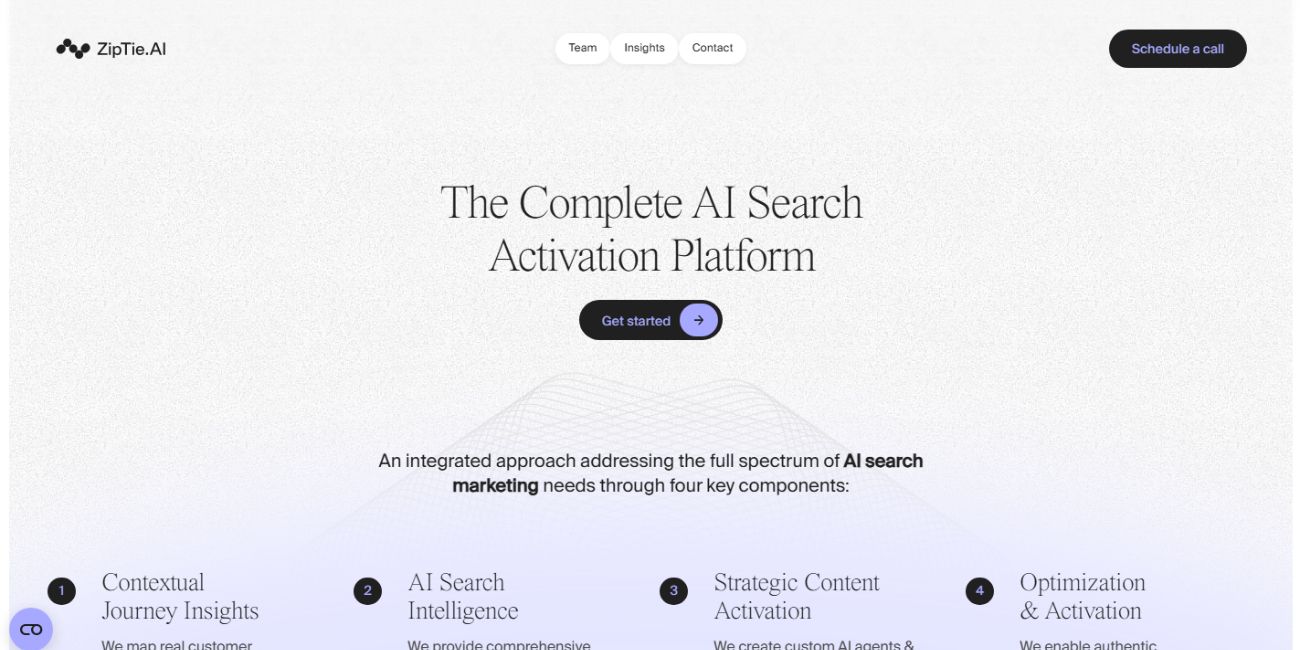

Ziptie AI is an AI-powered search performance tool designed to improve internal search results. Instead of only indexing content, it analyzes how users interact with search queries.
The system uses machine learning algorithms and Natural Language Processing (NLP) to understand user intent. It processes real-time search behavior and identifies patterns across queries, clicks, and conversions.
Rather than replacing your search engine, Ziptie AI works as a performance layer. It connects to your existing system and improves relevance based on actual user data. This makes it suitable for ecommerce platforms, SaaS websites, and content-heavy businesses.
How Ziptie AI Improves Search Relevance
Search relevance is not static. It changes based on user behavior. Ziptie AI tracks search queries and connects them to outcomes like clicks, purchases, and engagement.
Key improvements include:
- Detects user intent beyond keyword matching
- Identifies and fixes zero-result queries
- Adjusts ranking based on click-through rate
- Groups related queries using NLP clustering
- Suggests content gaps based on search demand
If many users search for a product and do not click any results, the system flags that issue. If users repeatedly click a specific result, ranking can adjust automatically.
This data-driven approach reduces guesswork. It shifts search from rule-based configuration to adaptive performance tuning.
AI and Machine Learning Capabilities
Ziptie AI relies on machine learning models to analyze search behavior patterns. These models learn from search logs and improve over time.
The use of Natural Language Processing helps interpret long-tail queries and conversational phrases. Instead of treating every word separately, the system evaluates context and semantic meaning.
AI features often include:
- Query intent recognition
- Behavioral pattern detection
- Predictive ranking adjustments
- Continuous performance feedback loop
This allows businesses to optimize search without manually reviewing every query. The system identifies trends that might otherwise go unnoticed.
Performance Impact on Conversion Rates
Internal search users usually have high purchase intent. Studies across ecommerce platforms show that visitors who use site search convert at higher rates compared to general browsers.
When search results improve, several performance metrics can improve:
- Higher click-through rate
- Lower bounce rate
- Increased product discovery
- Improved revenue per visitor
By connecting search queries with conversion rate optimization strategies, Ziptie AI supports better search-to-purchase flow. Instead of just tracking traffic, it focuses on outcomes.
Integration and Scalability
For businesses evaluating new tools, integration matters. Ziptie AI typically connects via API integration with existing search systems.
Technical advantages often include:
- API-based deployment
- Cloud infrastructure compatibility
- Real-time data processing
- Secure data handling practices
Because it works as a performance layer, companies do not need to replace systems like Elasticsearch or Algolia. That reduces migration risk and operational disruption.
Scalability is also important for high-traffic websites. Real-time data analysis allows the system to adjust rankings without manual updates.
Ziptie AI vs Algolia and Elasticsearch
It is important to clarify the difference in roles.
Elasticsearch is primarily a search engine and indexing system. It handles large datasets and query execution efficiently. However, relevance tuning often requires manual configuration.
Algolia provides hosted search with ranking customization and analytics. It improves speed and user experience, but optimization still depends on configuration and monitoring.
Ziptie AI focuses on search performance analytics and automated optimization. Instead of replacing core indexing systems, it enhances them with AI-driven relevance improvements.
In short:
- Elasticsearch focuses on indexing
- Algolia focuses on hosted search and ranking control
- Ziptie AI focuses on performance optimization through AI
The tools can complement each other rather than compete directly.
Who Should Choose Ziptie AI?
Ziptie AI may be suitable for:
- Ecommerce brands with large product catalogs
- SaaS platforms with complex feature documentation
- Marketplaces with high search traffic
- Content-heavy websites with internal search usage
Businesses that experience many zero-result queries or low search conversion rates may benefit most. If internal search drives revenue, improving search performance becomes a strategic priority.
Final Decision
Choosing a search performance tool depends on your business goals. If your main concern is basic indexing and speed, traditional systems like Elasticsearch may be enough. If your focus is on optimizing search behavior and increasing conversion rate, an AI-driven layer like Ziptie AI can provide additional value.
The decision should be based on search volume, conversion impact, and existing system setup. Reviewing search analytics data before choosing any tool is a smart first step.
If you have tested internal search optimization tools before, share your experience. Comparing real-world results helps others make better decisions.