



Marketing teams are under relentless pressure to produce more content, distribute it across more channels, and demonstrate measurable returns on every campaign. In this environment, artificial intelligence has shifted from an experimental technology to a strategic asset. AI-generated content—once viewed with skepticism—is now being integrated into mainstream marketing workflows across industries. The adoption is not driven by hype alone, but by performance data, efficiency gains, and measurable business outcomes.
TLDR: Marketers are embracing AI-generated content because it significantly improves efficiency, reduces costs, and accelerates content production without sacrificing measurable performance. Data shows that AI-assisted campaigns increase output while maintaining or improving engagement metrics. Organizations are integrating AI into their workflows to scale personalization and remain competitive. The shift is practical, data-backed, and increasingly unavoidable.
The Pressure to Produce More with Less
Over the past decade, content marketing volumes have increased dramatically. Research consistently shows that customers now interact with brands across websites, social media, email, search engines, and video platforms before making purchasing decisions. Each of these touchpoints requires tailored messaging.
According to multiple industry surveys, marketing teams report:
- Growing content demands across channels
- Flat or reduced budgets
- Higher expectations for personalization and measurable ROI
This imbalance has created an operational bottleneck. Traditional content production models—relying exclusively on human writers, designers, and editors—struggle to scale. AI-powered tools offer a direct response: faster drafting, automated optimization, and the ability to repurpose content efficiently across formats.


Early adoption data reflects this need. A growing majority of enterprise marketing departments now report using some form of AI assistance for content creation, ideation, or optimization. The reason is pragmatic: AI reduces production time while maintaining acceptable quality standards.
Efficiency Gains Backed by Data
The primary driver of AI adoption is productivity improvement. Multiple benchmark studies indicate measurable time savings when marketers use AI tools for drafting and ideation. On average, teams report:
- 30–50% reduction in first-draft creation time
- Significant decreases in research time
- Faster A/B testing and iteration cycles
These gains compound over time. For example, reducing drafting time by even 30% across dozens of blog posts, email campaigns, landing pages, and social posts per month can free hundreds of hours annually. That regained capacity can be redirected toward strategy, analysis, and creative refinement.
Importantly, efficiency does not appear to come at the cost of performance. In many tests, AI-assisted content performs on par with or slightly better than purely human-generated drafts once reviewed and optimized by editors. When measured by click-through rates, dwell time, or conversion rates, the performance gap continues to narrow.
Scalable Personalization at Scale
Consumers increasingly expect personalized experiences. Research has shown that personalized content improves engagement rates and purchase likelihood. Yet personalization is resource-intensive when performed manually.
AI systems can dynamically generate variations of messaging tailored to:
- Audience segments
- Geographic regions
- Customer lifecycle stages
- Behavioral data
This capability makes individualized marketing economically viable. Rather than producing one email campaign for an entire list, marketers can generate dozens of targeted variations in minutes. Similarly, ad platforms benefit from AI-generated copy permutations that allow rapid performance testing.

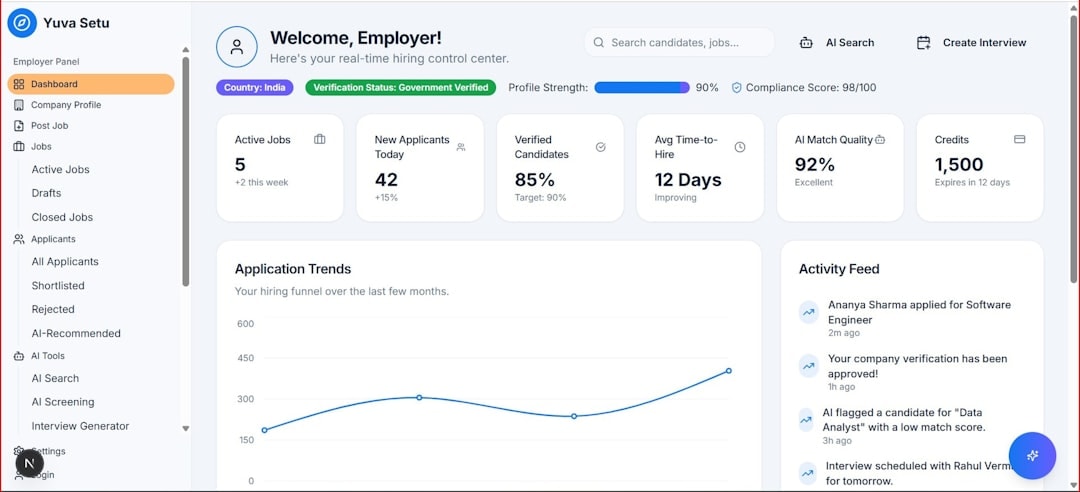
Data consistently shows that segmented campaigns outperform one-size-fits-all messaging. AI tools allow marketers to execute segmentation strategies that were previously too time-consuming or costly.
Search and Performance Optimization
Search engine optimization remains a primary content driver. AI-generated content tools are increasingly equipped with SEO integration features that analyze keyword relevance, semantic relationships, and competitive landscapes in real time.
Marketers using AI assistance for SEO tasks report:
- Faster topic cluster development
- Improved keyword coverage
- Higher publishing frequency
Performance metrics demonstrate that publishing cadence correlates with increased organic traffic growth—provided quality thresholds are maintained. AI helps sustain consistent output while maintaining structural SEO fundamentals such as internal linking and metadata alignment.
Additionally, AI can analyze historical performance data to recommend improvements to headline structure, formatting, call-to-action placement, and readability. These adjustments, though incremental, can collectively enhance engagement and conversion metrics.
Cost Efficiency and Budget Optimization
Marketing budgets are under scrutiny, particularly during periods of economic uncertainty. AI-generated content can significantly reduce content production costs, especially for high-volume needs such as product descriptions, FAQ pages, and social media posts.
Cost comparisons show that AI-assisted workflows often result in lower per-asset production expenses when factoring in:
- Reduced outsourcing costs
- Shorter turnaround times
- Fewer editing cycles
This does not imply replacing creative talent. Rather, teams are restructuring workflows. Human professionals increasingly oversee strategy, brand voice calibration, and final quality assurance, while AI handles first drafts, variant generation, and data-heavy tasks.
The result is a hybrid production model that preserves human oversight while expanding capacity.
Data-Driven Decision Making
Modern AI systems do more than generate text. They analyze performance data. Integrated tools can monitor content engagement in real time and recommend iterative improvements.

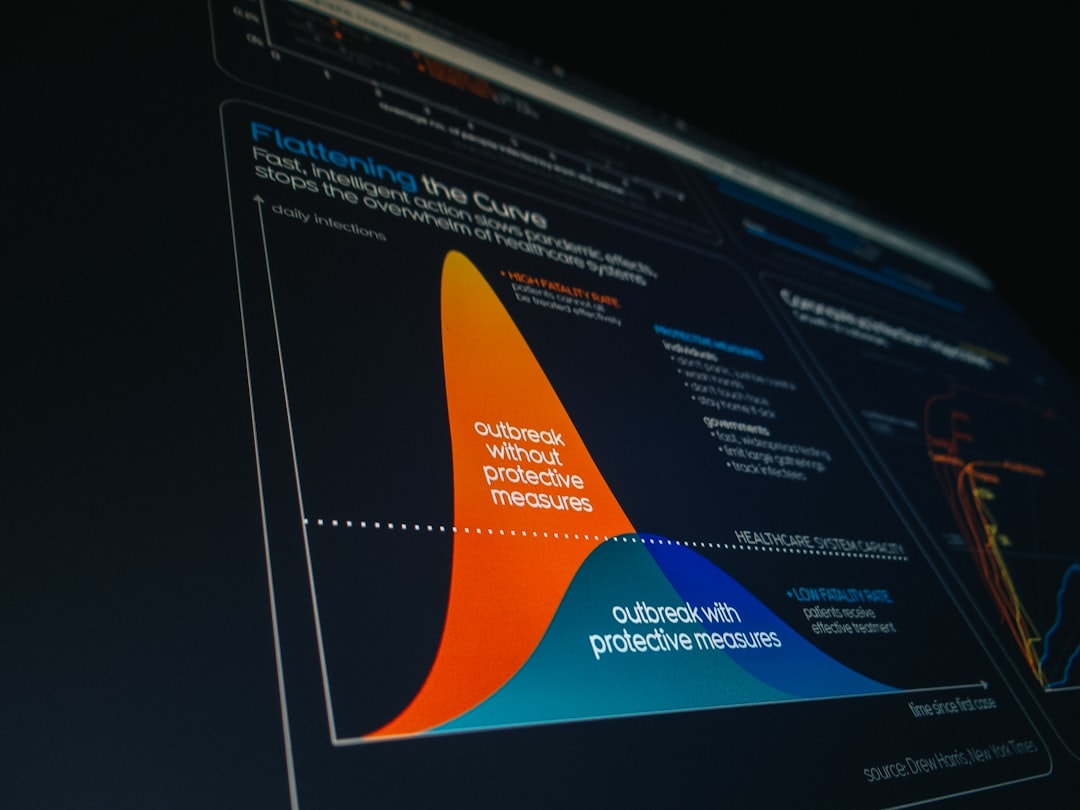
For example, AI can identify:
- Drop-off points in blog articles
- Underperforming email subject lines
- High-converting phrasing patterns
By connecting content generation with performance analytics, marketers reduce reliance on intuition alone. Decisions become evidence-based, supported by measurable engagement trends rather than subjective preference.
Organizations adopting these feedback loops report shorter optimization cycles and more predictable outcomes.
Governance, Risk, and Brand Safety
Despite widespread adoption, serious marketing organizations are implementing safeguards. Concerns about brand voice consistency, misinformation, and compliance remain valid.
To mitigate risks, companies are establishing governance frameworks that include:
- Human review checkpoints
- Clear brand voice guidelines
- Fact verification protocols
- Usage transparency policies
Data shows that organizations combining AI assistance with editorial oversight achieve the best balance of efficiency and reliability. AI is positioned as a collaborator, not an autonomous decision-maker.
Competitive Pressure and Industry Momentum
Adoption is accelerating partly because competitors are moving quickly. When large organizations report measurable cost reductions or improved turnaround times through AI integration, industry peers take notice.
Marketing leaders increasingly view AI capability as a core operational competency. As more tools integrate seamlessly into content management systems, CRM platforms, and analytics suites, the friction of adoption decreases.
This momentum creates a reinforcing cycle:
- Early adopters demonstrate efficiency gains
- Competitors follow to avoid falling behind
- Tool providers improve reliability and integration
- Adoption expands further
Such patterns are typical of technological inflection points in marketing history, similar to the rise of marketing automation platforms a decade earlier.
The Human-AI Collaboration Model
The most successful implementations do not eliminate human creativity. Instead, they redefine roles. Marketers shift from purely content generators to:
- Strategic planners
- Brand guardians
- Data interpreters
- Creative directors
AI handles structured production tasks and rapid iteration, while humans refine tone, emotional nuance, and brand alignment. This partnership approach aligns with performance data: campaigns that combine AI speed with human judgment consistently outperform fully automated or purely manual approaches.
What the Data Ultimately Suggests
The embrace of AI-generated content is not merely technological enthusiasm. It is a response to measurable pressures and verified outcomes. Data indicates that AI can:
- Increase content velocity
- Enhance personalization
- Lower production costs
- Improve optimization cycles
At the same time, long-term success depends on disciplined oversight, ethical guidelines, and strategic clarity.
Marketing has always evolved alongside technology—from print automation to digital analytics. AI represents the next structural shift. For organizations willing to adopt a measured, data-informed approach, AI-generated content is proving to be not merely a convenience but a competitive necessity.
In a landscape defined by scale, speed, and accountability, marketers are embracing AI not because it is novel, but because it works.