


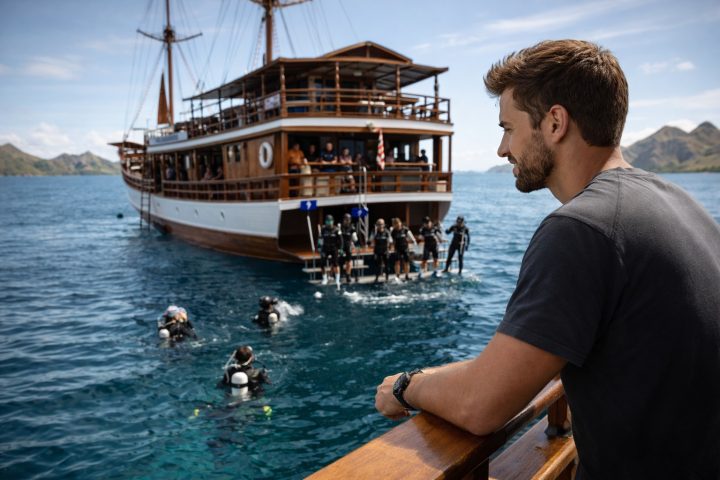
Before a guest ever steps onto the gangway, they want one thing: confidence that the trip will be well-run. That’s why an Indonesian liveaboard scuba diving guide should focus less on glossy destination claims and more on how routes, routines, and decision-making actually work at sea, because in Indonesia, the boat is not just transport, it is the hotel, the dive centre, and the safety system combined.
I’ve managed liveaboards across Indonesia for more than 15 years, working with dive teams, hospitality crews, and the behind-the-scenes logistics that make a remote itinerary feel effortless. This article is written for diving centre owners and B2B diving software readers who care about operational quality: what makes a liveaboard reliable, how the guest journey is engineered, and where software can reduce friction without turning hospitality into a checklist exercise.


Why “liveaboard Indonesia” is a distinct product category
The phrase liveaboard Indonesia is often used as if it refers to a single standard experience. In reality, Indonesia liveaboards range from short-hop itineraries near established ports to expedition-style routes with long crossings and limited contingency options. The diversity of geography drives the diversity of operations.
Indonesia’s archipelago makes liveaboards especially relevant because many of the most spectacular reefs are either far from shore infrastructure or spread across multiple islands. The liveaboard model exists to solve an access problem: you cannot reliably “day trip” to remote areas and still offer a calm, safe, well-paced diving schedule.
For operators and software builders, the implication is clear: a liveaboard is an ecosystem. It’s not enough to manage bookings and cabin inventory. You’re managing people, weather windows, fuel planning, provisioning cycles, staff fatigue, diver suitability, and safety protocols that need to function in remote conditions.
The route is the business plan.
In a shore-based operation, your location is fixed, and your product adapts around it. On a liveaboard, your product is the route. Route design affects:
- Travel time versus dive time
- Guest energy and sleep quality
- Fuel and provisioning costs
- Risk exposure (sea state, remoteness, emergency response time)
- Dive mix (reefs, walls, muck, pelagic chances)
A route that looks exciting on paper can fail if it forces the crew into constant late-night repositioning or if it leaves no room for weather-driven changes. The best operations build in optionality: alternate sites, sheltered areas, and a realistic daily rhythm.
From a business standpoint, route realism protects margin and reputation. From a guest standpoint, it protects comfort, especially for travellers who underestimate how tiring a high-frequency dive schedule can be.
What experienced guests notice first: rhythm and predictability
Guests who have done a few liveaboards don’t judge quality by the fanciest saloon. They judge it by how the day flows. Consistency is the luxury.
A well-run daily rhythm typically includes:
- A clear wake-up plan and briefing cadence
- Predictable meal timing that aligns with dive windows
- Simple, repeated safety procedures that never feel rushed
- Kit management that reduces clutter and mistakes
- A calm approach to delays, tide changes, or site swaps
This is where hospitality and diving merge. The dive team owns underwater safety and site selection, but the hospitality team shapes how the day feels. When those two teams operate as one unit, guests feel looked after even when conditions are challenging.
Diver suitability: the operational topic too many ignore
One of the most significant “silent risks” in Indonesian liveaboard scuba diving is mismatched diver ability. Liveaboards often attract ambitious travellers: “I want to do Komodo,” “I want currents,” “I want big stuff.” But ambition doesn’t always match experience or recency.
Strong operations treat suitability as routine, not judgmental:
- They ask about recent dives, comfort in current, and confidence with negative entries
- They design groups thoughtfully, not randomly.
- They offer conservative options without shaming anyone.
- They stop problems early, before they become incidents.
For software developers, this is a huge opportunity. A lightweight pre-trip profile that captures ability, recency, and comfort factors can protect both safety and guest satisfaction without requiring a lengthy, clinical questionnaire.
Safety culture that feels human, not authoritarian
Guests accept strict safety practices when the tone is calm and respectful. The best liveaboards don’t try to “sound tough”. They aim for clarity and repetition.
What works:
- Short, standardised briefings with site-specific essentials
- Clear roles: who leads, who sweeps, who responds on the surface
- Practical reminders (hydration, sun exposure, surface signalling)
- Consistent headcounts, consistent procedures, every time
What fails:
- Overly technical lectures
- Inconsistent enforcement (“sometimes it’s fine”)
- Briefings that are rushed because the schedule is unrealistic
A professional safety culture is also good business. It reduces incidents, negative word of mouth, and staff burnout from constant firefighting.
The guest experience is built on small operational decisions
On a liveaboard, guests can’t “leave and cool off” if they’re unhappy. That’s why the small stuff matters more than people expect:
- A place to dry items without turning the deck into chaos
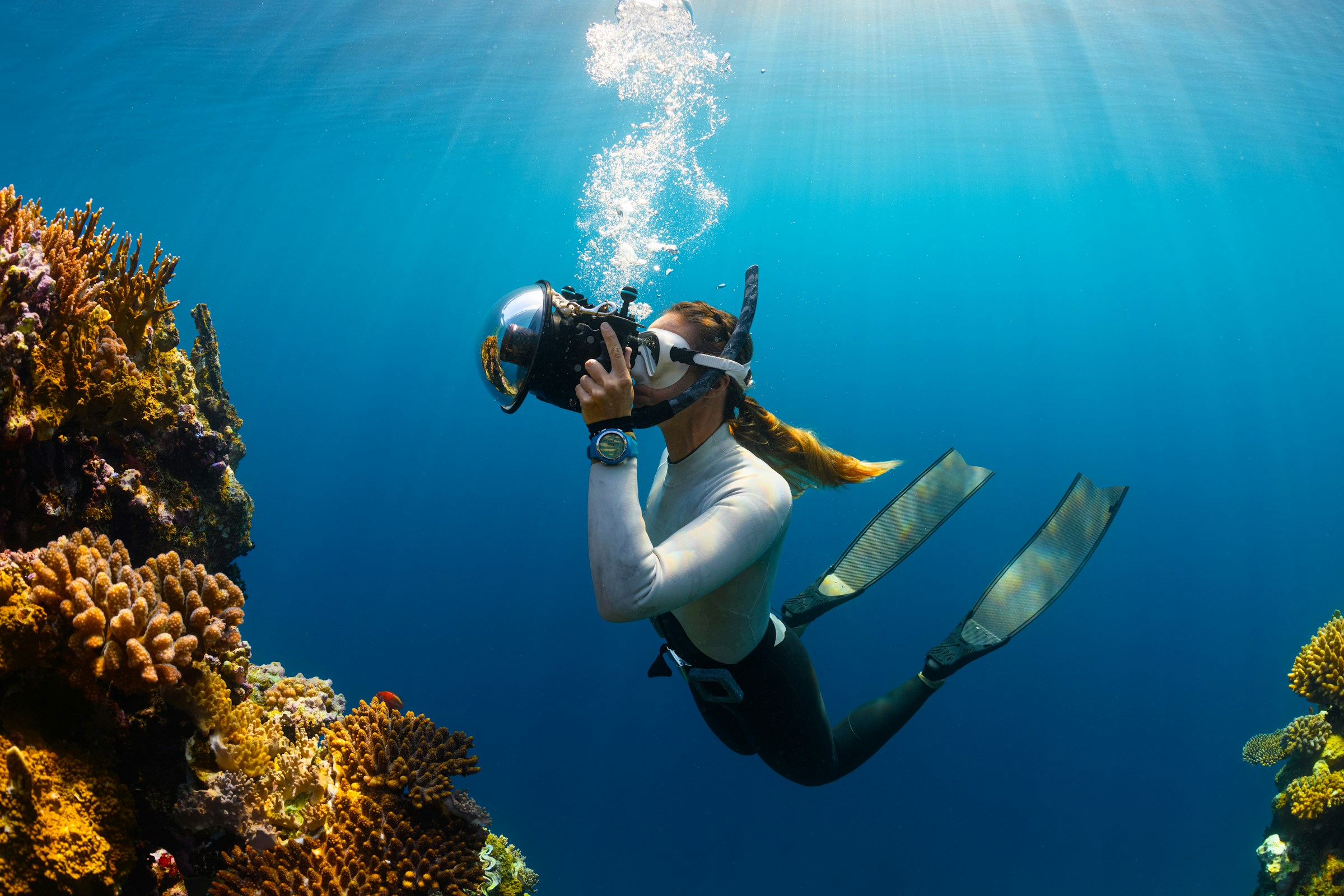
- Smooth camera handling protocols for photographers
- Clear guidance on seasickness and rest
- Flexible food timing for divers with low appetite after dives
- Quiet hours that are actually protected
These are hospitality decisions, but they have commercial consequences: calmer guests complain less, tip fairly, and recommend more reliably.

Where B2B diving software can genuinely add value
Many liveaboard operators still run on a patchwork of spreadsheets, WhatsApp groups, and institutional memory. It can work until it doesn’t. Good software doesn’t replace judgment; it supports it.
Here are practical areas where software helps most:
1) Single source of truth for itinerary changes
Weather and tide changes happen. Guests handle changes well when communication is consistent. Software that pushes a single updated plan (dive times, briefings, meals, site notes) reduces confusion and the need for repetitive staff explanations.
2) Equipment and nitrox tracking that reduces errors
Cylinder labelling, gas planning, and kit assignments should be boringly reliable. Simple interfaces that capture what matters without forcing staff to slow down for data entry reduce mistakes.
3) Crew tasking and handover continuity
Liveaboards run on shift discipline. A task board for housekeeping, galley, tender operations, and guest requests can prevent “I thought you did it” moments.
4) Guest profiles that support better guiding
Notes like “anxious on backroll entries” or “prefers to stay shallow” are not marketing data—they’re service data. When captured respectfully, they improve safety and enjoyment.
A word on brand names: when they become operational shorthand
Travellers often use brand references as a shortcut for “I want a certain standard.” Mentioning Neptune live-aboard here reflects that reality in the market: some guests associate established operators with consistency in guiding, safety routines, and on-board hospitality. For industry readers, the point isn’t the name, it’s what the name represents.
Brands that earn loyalty usually do it through repeatable systems: training, maintenance discipline, clear SOPs, and calm leadership. Those are the elements smaller operators can learn from, and software can help standardise.
Commercial realities: margins, staffing, and maintenance aren’t optional
Liveaboards are capital-intensive. Maintenance cycles, engine reliability, tender upkeep, compressor servicing, and safety equipment checks aren’t back-office concerns; they are existential.
A common mistake is trying to “sell” an itinerary that the operation can’t consistently deliver because the margin doesn’t support:
- Adequate crew numbers
- Proper maintenance windows
- Backup parts and redundancy
- Training and retention
From a business standpoint, the best liveaboards are those with discipline: they price and schedule to protect the operation, not to chase volume at any cost.
Closing thought: the best liveaboards feel calm because their operations are disciplined
A practical Indonesia liveaboard scuba diving guide should leave readers with one core idea: the magic at sea is engineered. It’s engineered through route realism, consistent routines, respectful safety culture, and hospitality details that protect comfort across long days.
For diving centre owners, Indonesia liveaboards are a benchmark in experience design: how to deliver complex, weather-dependent services with reliability. For B2B software builders, they are an ideal proving ground: if your tools can reduce friction on a moving hotel that runs four dives a day in remote waters, they can improve almost any dive operation anywhere.
And for guests, the takeaway is simple: choose the trip by how it is run, not only by where it goes. In Indonesia, the boat is the experience, and the best experiences are those prepared, not improvised.