

Marketing is undergoing a profound transformation. As artificial intelligence systems become more advanced, accessible, and integrated into daily workflows, the fundamental question is no longer whether AI will change marketing, but how humans and AI will work together to shape its future. The most forward-thinking organizations have already recognized that the goal is not automation alone. It is collaboration—leveraging machine intelligence to augment human creativity, judgment, and strategic insight.
TLDR: The future of marketing lies in collaboration between humans and AI, not replacement. AI excels at processing data, identifying patterns, and automating execution, while humans provide creativity, empathy, and ethical judgment. Organizations that combine these strengths will achieve more personalized, efficient, and impactful marketing. Success will depend on building systems where technology enhances human decision-making rather than attempting to substitute it.
For decades, marketing has evolved alongside technology—from print to digital, from desktop to mobile, from broadcast messaging to personalized engagement. What distinguishes the current wave of innovation is the speed and scope at which AI systems can analyze consumer behavior, predict outcomes, and generate content at scale. Yet despite the power of algorithms, marketing remains fundamentally human. It is about understanding needs, building trust, and crafting stories that resonate.
The convergence of these realities marks a new era. Artificial intelligence provides unprecedented analytical depth and operational efficiency, while human marketers provide empathy, context, and ethical reasoning. Together, they form a partnership capable of delivering better outcomes than either could alone.
The Strengths AI Brings to Marketing
Artificial intelligence has rapidly proven its value in several core marketing functions. Its strength lies in managing complexity, recognizing patterns across vast datasets, and operating continuously without fatigue.
- Data Analysis at Scale: AI systems can process millions of customer interactions in seconds, identifying trends invisible to manual analysis.
- Predictive Modeling: Machine learning algorithms forecast customer behavior, allowing marketers to optimize campaigns before launch.
- Personalization: AI dynamically tailors content, product recommendations, and offers to individual users in real time.
- Automation: Routine processes—email sequencing, bidding adjustments, performance tracking—can operate autonomously.
- Content Assistance: Generative AI tools draft copy, create visuals, and suggest creative variations quickly.
These capabilities dramatically increase efficiency. Marketing teams can test more ideas, refine messaging rapidly, and allocate budgets with greater precision. As a result, organizations reduce waste and deliver more relevant experiences.

However, AI’s strengths are not universal. Machines process data exceptionally well, but they lack lived experience, cultural intuition, and moral responsibility. Their outputs reflect patterns in training data rather than genuine understanding. This limitation is not a weakness when properly framed—it is precisely why collaboration is essential.
The Enduring Value of Human Marketers
While technology advances rapidly, certain human capabilities remain irreplaceable. Marketing ultimately concerns people—their motivations, fears, aspirations, and identities. Humans intuit nuance. They detect shifts in tone and meaning that raw data alone cannot capture.
Human marketers contribute:
- Strategic Vision: Defining long-term brand positioning and competitive direction.
- Creative Originality: Generating concepts that break conventions rather than replicate patterns.
- Ethical Oversight: Ensuring campaigns respect privacy, avoid manipulation, and align with societal norms.
- Empathy: Understanding how messaging will emotionally resonate across cultures and contexts.
- Judgment: Knowing when data-driven suggestions conflict with brand integrity or human dignity.
For example, AI may suggest sensational headlines because historical data indicates higher click-through rates. A human marketer must decide whether such tactics align with the brand’s reputation and long-term trust. Collaboration means using AI insights as informed recommendations—not unquestioned directives.
Where Collaboration Creates the Greatest Impact
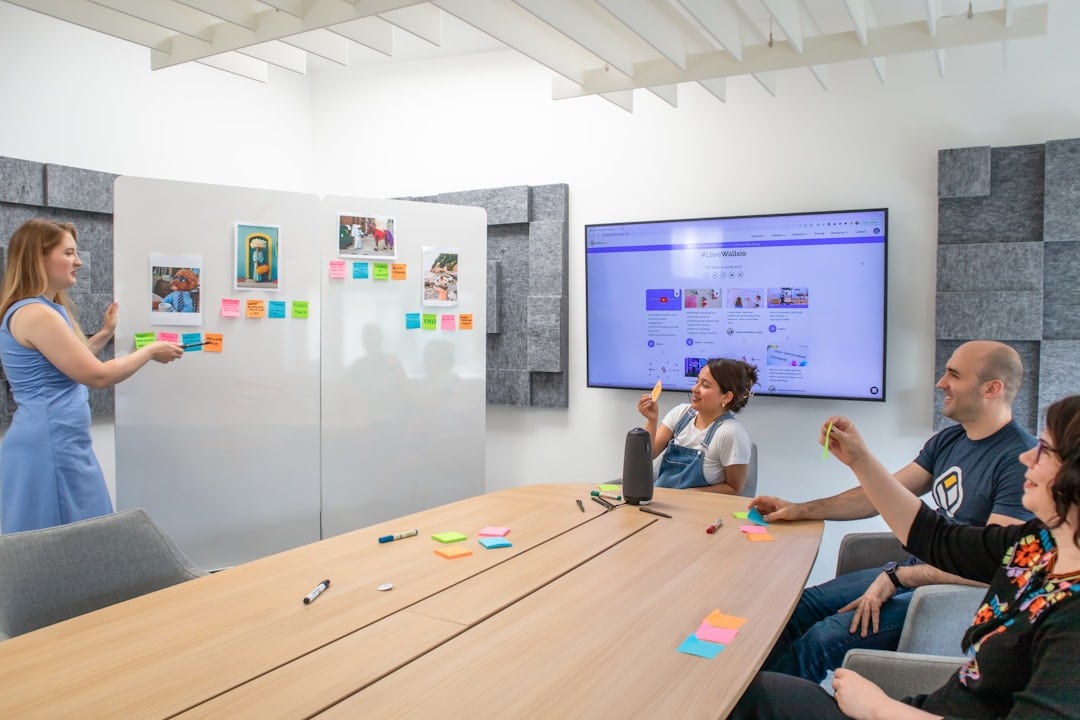
The most effective marketing organizations structure their workflows around partnership rather than replacement. AI handles repetitive tasks and complex analysis; humans focus on interpretation, refinement, and strategic alignment.
Consider content development. An AI system can generate multiple draft variations of a campaign theme in seconds. A human creative director evaluates tone, selects promising concepts, adjusts messaging for brand consistency, and ensures emotional authenticity. The result is faster production without sacrificing quality.
In campaign optimization, algorithms monitor performance metrics in real time, reallocating budgets dynamically. Yet human marketers interpret broader market conditions—economic shifts, cultural events, competitive movements—that influence those numbers. The collaborative loop enhances both agility and strategic coherence.
Customer segmentation offers another example. AI clusters audiences based on behavior and demographics. Humans then contextualize those clusters, creating narratives that translate statistical groupings into meaningful personas. Data becomes insight; insight becomes strategy.
Building Trust in an AI-Driven Environment
One of the most critical factors shaping the future of marketing is trust. Consumers are increasingly aware that algorithms influence what they see and how they are targeted. Transparency and accountability therefore become central to sustainable growth.
Marketing teams must adopt clear principles:
- Transparent Data Practices: Customers should understand how their data is collected and used.
- Responsible Personalization: Targeting should feel helpful, not intrusive.
- Bias Mitigation: AI systems must be regularly audited to prevent discriminatory outcomes.
- Human Review: Sensitive messaging and campaign decisions should not be left solely to algorithms.
Human oversight is especially critical in regulated industries such as finance, healthcare, and public services. AI can accelerate communication, but final accountability always rests with people. When collaboration is designed thoughtfully, AI becomes a tool that strengthens trust rather than undermines it.
Rethinking Skills and Team Structures
The rise of AI in marketing does not eliminate roles—it transforms them. Professionals must adapt, blending analytical literacy with creative agility. The modern marketer increasingly operates at the intersection of disciplines.
Key capabilities for the collaborative future include:
- Data Interpretation: Understanding outputs from machine learning systems.
- Prompt and Workflow Design: Guiding AI tools effectively to produce relevant results.
- Critical Evaluation: Assessing AI-generated content for accuracy and bias.
- Cross-Functional Communication: Bridging technical and creative teams.
- Ethical Awareness: Balancing innovation with responsibility.

Organizations must invest not only in software, but in education and governance frameworks. The competitive advantage will belong to companies that empower employees to work confidently alongside AI systems rather than fear displacement.
From Automation to Augmentation
It is important to distinguish between automation and augmentation. Automation replaces manual processes; augmentation enhances human capability. The future of marketing emphasizes the latter.
Augmented marketing environments may include AI-driven insights displayed during strategy meetings, real-time sentiment analysis during campaign launches, and predictive creative recommendations during brainstorming sessions. These systems do not dictate decisions—they inform them.
This distinction shapes corporate culture. If AI is framed as a cost-cutting replacement, morale suffers and strategic depth declines. If it is positioned as a collaborative partner, teams innovate more boldly. They experiment with greater confidence because analysis supports their hypotheses.
The Economic Implications
From an economic perspective, collaboration between humans and AI increases both productivity and quality. Campaign cycles shorten. Testing becomes continuous rather than episodic. Marketing budgets are allocated with greater precision, reducing inefficiencies.
At the same time, creative differentiation becomes more important. As generative AI tools become widely accessible, baseline content production will be commoditized. Competitive advantage will come not from merely using AI, but from how intelligently and ethically it is integrated into strategic thinking.
Businesses that strike this balance will build brands that are simultaneously efficient, responsive, and emotionally resonant.
Looking Ahead
The trajectory is clear: AI capabilities will continue to expand. Predictive systems will become more accurate. Generative tools will produce increasingly sophisticated multimedia assets. Voice, augmented reality, and immersive experiences will be guided by machine intelligence operating in the background.
Yet even as technology evolves, marketing’s central mission remains unchanged—to connect products and services with human needs in meaningful ways. Algorithms can calculate probabilities, but they cannot care. They cannot experience aspiration or disappointment. They cannot hold values.
The organizations that define the next era of marketing will be those that recognize this distinction. They will build systems where AI accelerates research, refines targeting, and enhances measurement, while humans shape purpose, narrative, and integrity.
In this collaborative future, marketing becomes both more scientific and more human. Decisions are informed by precise data, yet guided by empathy and ethical awareness. Creativity is expanded by computational support rather than constrained by it. Trust is reinforced through transparency and responsible governance.
The future of marketing is not a choice between humans and machines. It is a disciplined partnership. When implemented thoughtfully, collaboration between humans and AI does not diminish the role of marketers—it elevates it. By combining computational power with human insight, organizations can create marketing that is smarter, faster, and ultimately more meaningful.

