

Accurately predicting business growth is both an art and a science. In today’s data-driven economy, organizations can no longer rely solely on intuition to make strategic decisions. Instead, they turn to financial forecasting tools that transform historical data, market trends, and operational metrics into actionable insights. When used correctly, these tools empower leaders to plan investments, manage risk, allocate resources efficiently, and scale with confidence.
TLDR: Financial forecasting tools help businesses predict future revenue, expenses, and growth using data-driven models. From spreadsheets and budgeting software to AI-powered predictive analytics, these tools improve decision-making and reduce uncertainty. The most effective forecasts combine historical performance, market trends, and scenario planning. Businesses that adopt robust forecasting systems position themselves for smarter, more sustainable growth.
Financial forecasting is not just about projecting revenue for the next quarter. It is about building a structured view of the future—understanding cash flow cycles, identifying growth bottlenecks, and anticipating potential risks before they become critical. Let’s explore the most important tools and techniques businesses use to predict and shape their growth trajectory.
1. Spreadsheet-Based Forecasting Models
Despite the rise of advanced financial software, spreadsheets remain one of the most widely used forecasting tools. Programs like Excel and other spreadsheet platforms provide flexibility and control, allowing finance teams to build customized models tailored to their specific needs.
Common spreadsheet forecasting methods include:
- Linear regression models to identify trends in historical data.
- Growth rate projections based on year-over-year performance.
- Cash flow forecasting templates to monitor liquidity.
- Sensitivity analysis to evaluate different business scenarios.
The advantage of spreadsheets lies in their adaptability. Businesses can fine-tune assumptions, adjust inputs instantly, and model multiple growth possibilities. However, they require expertise and careful validation, as human error can easily distort projections.
Best suited for: Small to medium-sized businesses or startups that need flexibility without investing in complex software systems.
2. Budgeting and Financial Planning Software
As companies grow, manual spreadsheets can become time-consuming and error-prone. Budgeting and financial planning software automates many aspects of the forecasting process, improving accuracy and collaboration across departments.
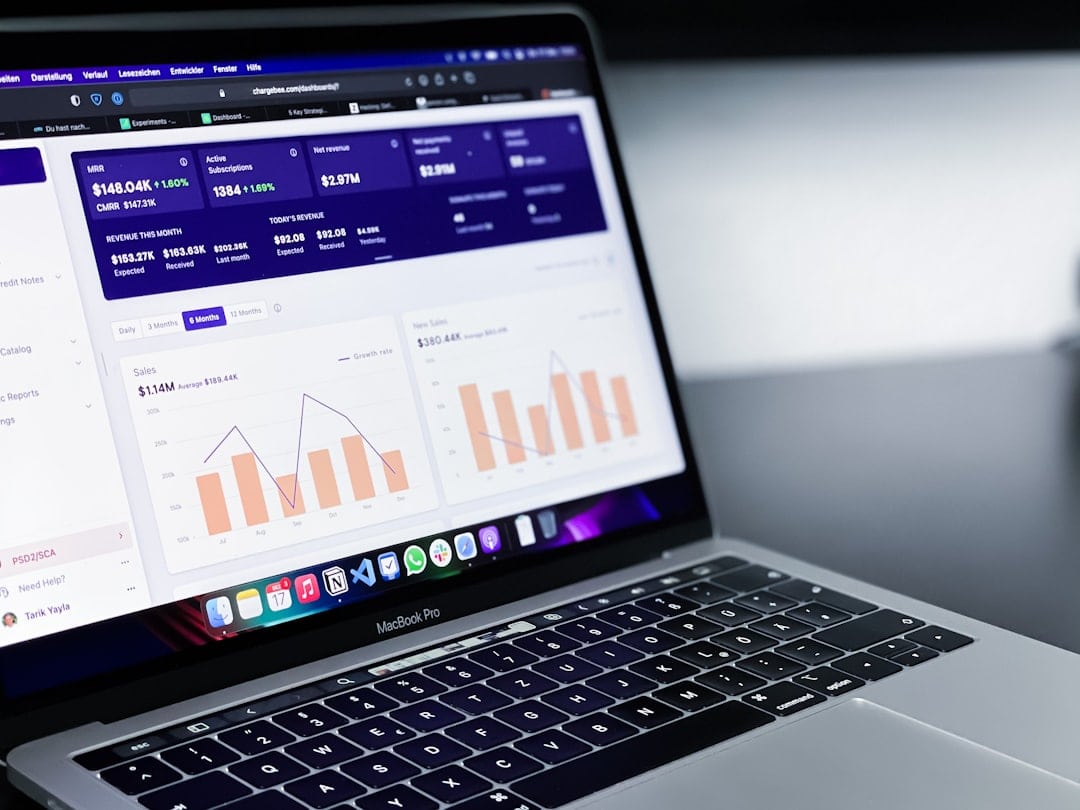
Modern financial planning systems offer features like:
- Real-time financial dashboards displaying key performance indicators (KPIs).
- Automated revenue and expense tracking.
- Integrated scenario modeling.
- Collaborative planning tools for cross-functional input.
These platforms centralize data from accounting, sales, marketing, and operations, making forecasting more comprehensive. Leaders gain visibility into performance trends and can quickly adjust strategies based on updated projections.
Best suited for: Growing companies that require team-based forecasting and more reliable automation.
3. Cash Flow Forecasting Tools
Business growth depends heavily on liquidity. A company can show strong revenue growth and still fail due to cash shortages. Cash flow forecasting tools focus specifically on predicting incoming and outgoing cash over a defined period.
Effective cash flow forecasting helps businesses:
- Anticipate short-term funding gaps.
- Plan inventory purchases.
- Schedule debt repayments strategically.
- Time capital investments appropriately.
By mapping payment cycles, receivables, and payables, companies avoid surprises that could hinder expansion plans. Many specialized tools now sync directly with accounting systems to provide rolling forecasts that update automatically.
Key insight: Predicting profit is important, but predicting cash flow is essential for survival and sustained growth.
4. Predictive Analytics and AI-Driven Forecasting
Artificial intelligence has transformed financial forecasting. Instead of relying solely on historical averages, AI-driven tools analyze vast datasets, detect hidden patterns, and produce more dynamic projections.

These systems can:
- Identify seasonal fluctuations with greater precision.
- Analyze customer behavior trends.
- Predict churn rates and customer lifetime value.
- Adjust forecasts automatically in response to new data.
Machine learning models continuously refine predictions as more data becomes available, making them particularly powerful for e-commerce companies, subscription-based services, and rapidly scaling startups.
While AI tools require consistent, high-quality data inputs, their forecasting accuracy often surpasses traditional methods. They also reduce the bias that can occur when decisions are based purely on managerial intuition.
Best suited for: Data-rich companies seeking advanced growth modeling and competitive advantage.
5. Scenario Planning and What-If Analysis
One of the most valuable financial forecasting techniques is scenario planning. Instead of predicting a single outcome, businesses model multiple possible futures. This approach acknowledges uncertainty and prepares companies for a range of possibilities.
Typical growth scenarios include:
- Optimistic scenario: Higher sales growth and favorable market conditions.
- Base scenario: Steady, expected performance.
- Pessimistic scenario: Economic downturn or operational disruption.
What-if analysis allows leaders to alter variables such as pricing, staffing levels, marketing expenses, or supply chain costs to see how each change affects growth trajectories.
This approach promotes strategic agility. If conditions change unexpectedly, companies already have contingency strategies mapped out.
6. Sales Forecasting Tools
Sales forecasting is often the foundation of broader financial projections. Without a clear revenue outlook, other financial estimates lose accuracy. Sales forecasting tools combine pipeline data, historical trends, and performance metrics to predict future revenue streams.
Advanced systems may incorporate:
- Customer segmentation data.
- Conversion rates across channels.
- Market demand indicators.
- Sales team performance metrics.
When sales forecasts align with marketing strategies and operational capacity, businesses can scale effectively without overextending resources.
Pro tip: Integrating sales forecasting tools with financial planning software creates a unified growth prediction system.
7. Rolling Forecast Models
Traditionally, businesses relied on annual budgets. However, static yearly forecasts can quickly become outdated in competitive markets. Rolling forecasts solve this issue by continuously updating projections—monthly or quarterly—based on actual performance.
Benefits of rolling forecasts include:
- Greater flexibility in changing environments.
- More accurate short-term planning.
- Improved resource allocation.
- Reduced reliance on outdated assumptions.
This method shifts forecasting from a once-a-year task to an ongoing strategic process. Companies that adopt rolling forecasts often respond faster to market shifts and seize emerging growth opportunities earlier.
8. Key Metrics That Power Accurate Forecasts
No forecasting tool can succeed without reliable metrics. Growth predictions depend on identifying and tracking the right indicators. Among the most impactful are:
- Revenue growth rate
- Gross profit margin
- Operating expenses ratio
- Customer acquisition cost
- Customer lifetime value
- Burn rate (for startups)
Combining these metrics with forecasting software strengthens reliability. The more accurate and consistent the data inputs, the more dependable the projections.
9. Challenges in Financial Forecasting
While forecasting tools are powerful, they are not infallible. Businesses must navigate several common challenges:
- Data quality issues that distort projections.
- Overreliance on past trends in rapidly changing markets.
- Cognitive bias influencing assumptions.
- External economic shocks that models cannot easily predict.
The solution lies in combining data-driven tools with informed human judgment. Forecasts should be reviewed regularly and adjusted as new information becomes available.
Building a Strong Forecasting Culture
Financial forecasting is most effective when embedded into company culture. Rather than being confined to the finance department, forecasting should involve sales, marketing, operations, and executive leadership.
To build a sustainable forecasting system:
- Standardize financial data collection processes.
- Invest in scalable forecasting software.
- Train teams to interpret financial projections correctly.
- Review forecasts consistently and refine assumptions.
- Align forecasts with strategic goals.
When forecasting becomes a collaborative effort, it enhances transparency and accountability across the organization.
The Future of Financial Forecasting
As technology evolves, financial forecasting will become more predictive, automated, and integrated. Real-time analytics, AI-enhanced modeling, and cloud-based collaboration platforms are already reshaping how companies plan growth.
Businesses that invest early in advanced forecasting tools gain a significant advantage. They reduce uncertainty, improve capital allocation, and make smarter expansion decisions. More importantly, they transform forecasting from a reactive exercise into a proactive growth strategy.
In an increasingly competitive landscape, the ability to anticipate the future may be the ultimate strategic advantage.
Financial forecasting tools do more than estimate numbers—they provide clarity. Whether through simple spreadsheets or sophisticated AI platforms, these tools help leaders see beyond the present moment. With the right systems in place, businesses can move forward not with guesswork, but with calculated confidence and a clear roadmap for sustainable growth.

