

Business education is entering a period of rapid transformation as artificial intelligence moves from the margins of experimentation to the center of teaching, learning, and institutional strategy. What once relied heavily on lectures, textbooks, and static case studies is increasingly shaped by data driven systems that adapt to learners, simulate complex markets, and connect classrooms with real world business dynamics. The result is a more personalized, practical, and forward looking approach to preparing future leaders.
TLDR: Artificial intelligence is reshaping business education by personalizing learning, creating immersive simulations, and connecting students with real time business insights. AI powered tools help institutions teach both technical and human centered skills more effectively. Educators are shifting from information delivery to mentorship and strategic guidance. Together, these changes are creating a more agile and relevant model for preparing tomorrow’s business professionals.
One of the most significant changes AI brings to business education is the move away from one size fits all instruction. Traditional curricula assume students progress at the same pace and absorb information in similar ways. AI powered learning platforms challenge this assumption by continuously analyzing how students interact with material and adjusting content accordingly. This personalization is especially valuable in business programs, where students often arrive with diverse academic, cultural, and professional backgrounds.
Adaptive learning systems can identify gaps in a student’s understanding of finance, marketing, or strategy and respond with targeted exercises, explanations, or case studies. For example, a learner struggling with quantitative analysis might receive additional visualizations and step by step problem solving support, while another student moves ahead to advanced applications. By meeting learners where they are, AI helps reduce frustration, increase engagement, and improve overall outcomes.
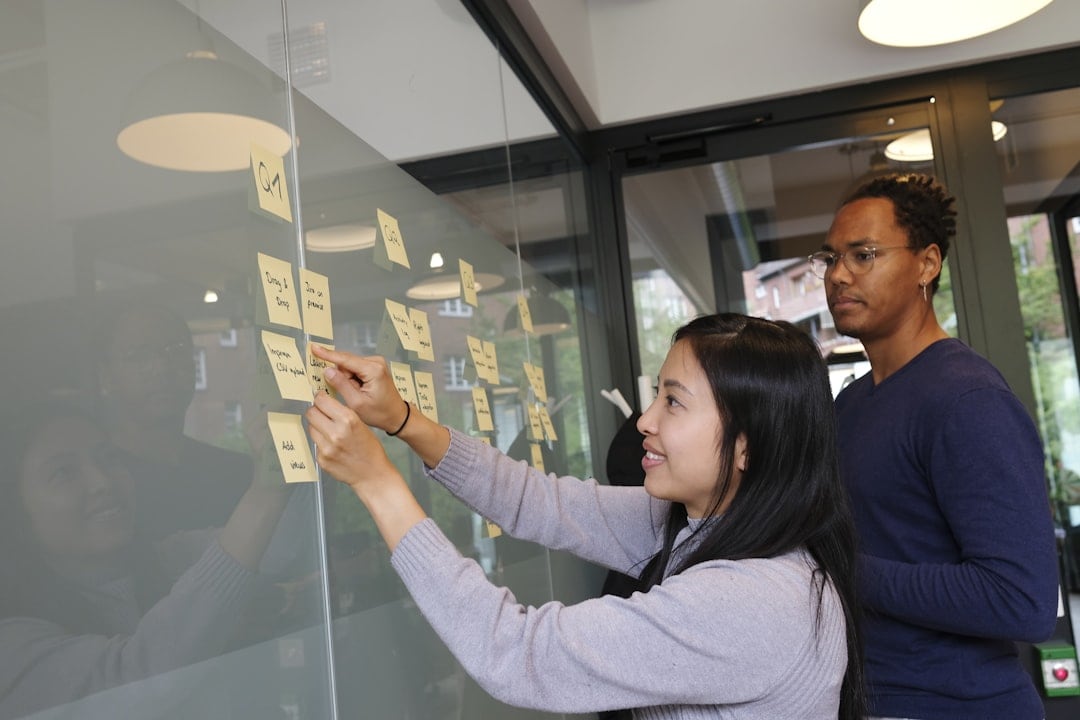
Beyond personalization, AI is transforming how business concepts are taught by making learning more experiential. In the past, business simulations were often limited, expensive, or static. Today, AI driven simulations can model entire economies, industries, or organizations in real time. Students can experiment with pricing strategies, supply chain decisions, or leadership styles and immediately see the consequences of their choices.
These simulations encourage active learning and critical thinking. Instead of memorizing theories about competition or organizational behavior, students experience the dynamic nature of business firsthand. They learn that markets are unpredictable, data is imperfect, and decision making involves uncertainty. This type of immersive learning better reflects the realities graduates will face in their careers.
Key benefits of AI powered simulations include:
- Safe environments for experimenting with high risk decisions
- Immediate feedback on strategic choices
- Opportunities to practice collaboration and negotiation
- Exposure to complex, interconnected business systems
Another innovative application of AI in business education is intelligent tutoring and feedback. Writing business plans, marketing strategies, or financial reports has traditionally required significant faculty time for evaluation. AI tools can now provide instant feedback on structure, logic, clarity, and even ethical considerations, allowing students to revise and improve their work continuously.
While AI generated feedback does not replace human judgment, it enhances the learning process through immediacy and consistency. Students gain the opportunity to iterate multiple times before final submission, developing stronger analytical and communication skills. Faculty, in turn, can focus on higher level guidance, such as evaluating originality, strategic insight, and contextual awareness.

Assessment is also evolving under the influence of AI. Traditional exams often test short term memory rather than real understanding. AI enables more authentic forms of assessment, such as ongoing performance tracking, project based evaluations, and real time analytics. In business education, this means measuring how well students can apply concepts over time, not just recall them on a single test day.
For instance, an AI system might analyze participation in discussions, decision quality in simulations, and improvement across multiple assignments. This holistic view of learning provides educators with richer insights into student progress and helps identify those who may need additional support early on. It also aligns assessment more closely with workplace expectations, where performance is measured continuously rather than episodically.
AI is also reshaping the role of educators in business schools. Instead of being the primary source of content, instructors increasingly act as facilitators, mentors, and designers of learning experiences. With AI handling routine tasks such as grading quizzes or tracking engagement, faculty can devote more time to coaching students, fostering debate, and connecting theory to practice.
This shift requires new skills for educators, including data literacy and the ability to critically evaluate AI tools. Business schools are responding by investing in faculty development programs that help instructors understand how to integrate AI responsibly and effectively. The goal is not to replace human expertise but to amplify it.

Ethics and responsible leadership are emerging as central themes in AI enabled business education. As students increasingly rely on AI systems, schools must address questions about data privacy, algorithmic bias, and transparency. These topics are not just academic concerns; they are core issues future managers and executives will face.
By integrating ethical discussions into AI powered learning tools and case studies, business programs can teach students to question not only what technology can do, but what it should do. This emphasis on ethical reasoning helps ensure that graduates are prepared to lead in a way that balances innovation with social responsibility.
AI is also improving accessibility and inclusion in business education. Language translation tools, speech to text systems, and personalized pacing enable learners from different backgrounds and abilities to participate more fully. Online and hybrid programs powered by AI extend the reach of top business schools to working professionals and students in underserved regions.
This democratization of education has long term implications for the business world. As more people gain access to high quality learning experiences, organizations benefit from a more diverse and globally informed talent pool. AI, when used thoughtfully, becomes a tool for expanding opportunity rather than reinforcing existing inequalities.
Partnerships between business schools and industry are growing stronger through AI. Companies can share anonymized data sets, real world problems, and even live operational challenges with students. AI systems help manage and analyze this information, turning it into practical learning material. Students gain exposure to current business challenges, while organizations gain fresh perspectives and potential talent.
Looking ahead, the future of business education will likely involve even deeper integration of AI, from virtual reality boardrooms to predictive analytics that guide curriculum design. Programs will become more modular, allowing learners to update skills throughout their careers. Business schools that embrace these innovations will be better positioned to remain relevant in a rapidly changing economic landscape.
In conclusion, AI is not simply a new tool for business education; it is a catalyst for rethinking how knowledge, skills, and leadership are developed. By personalizing learning, enabling immersive experiences, supporting educators, and promoting ethical awareness, AI is shaping a more responsive and impactful educational model. As these innovations continue to evolve, business education has the opportunity to better prepare students not just to succeed in business, but to shape its future with insight and responsibility.

