

If an invitation is sent to you and the word RSVP is written on it, the host is expecting your response. They want to know whether you will attend the event or not. That is the simple meaning, even though the word sounds a little formal.
RSVP can appear on a wedding invitation, birthday card, dinner invitation, baby shower invite, office event email, or even an online party invite. Some people think RSVP means they must attend the event, but that is not true. It only means the host is waiting for your answer.
This article is for anyone who received an invitation and does not know what RSVP means, how to reply, or what words like “RSVP by” and “regrets only” mean. I’ll explain it in plain English with simple examples, so you can respond the right way and not overthink it.
What Is the Meaning of RSVP in Simple Terms?
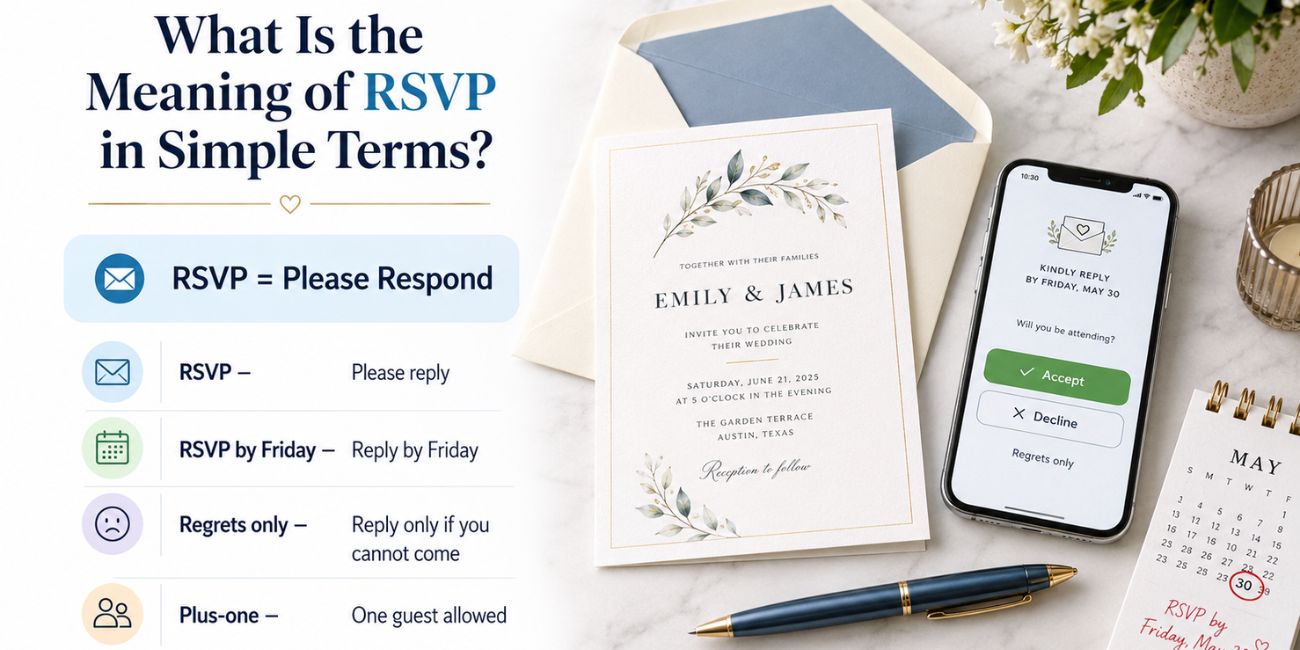
RSVP means “please respond.” It comes from the French phrase “Répondez s’il vous plaît,” but in normal English it simply means reply to the invitation. You do not need to remember the French phrase if you understand what to do.
When an invitation is marked with RSVP, the host is asking about your plan. Will you come or will you not come. That is the real question behind it.
Many people think RSVP means “reply only if you are attending.” In most cases, that is wrong. When an invitation asks for RSVP, you should respond even if the answer is no, because that still helps the host.
| Invitation Word | What It Means |
|---|---|
| RSVP | Please reply |
| RSVP by Friday | Reply by Friday |
| Regrets only | Reply only if you cannot come |
| Plus-one | One guest is allowed, if permitted |
When an invitation reads “RSVP by June 10,” the host expects your reply by June 10. Do not wait until they ask again, because they may already be planning the food, seating, and guest list.
Why Do Invitations Ask for RSVP?
Invitations ask for an RSVP because the host must make proper arrangements for the event. It may seem like a small detail from the guest side, but it can affect many things for the person planning.
Think about a wedding. The couple might have to tell the caterer how many guests will be present. They may also need to plan tables, chairs, name cards, and seating. When many people do not respond, the final guest list can get confusing.
This also happens with smaller events. When someone is planning a birthday dinner, they need to know how many seats to book. It is stressful if they prepare for 8 people and 15 people show up. Preparing for 15 and only seeing 6 people come is not great either.
So when you respond to an RSVP, you are helping the host. It can be done in a minute, but it saves them from guessing. And honestly, guesswork is one of the most annoying parts of event planning.
What Does RSVP Mean – Yes or No?
RSVP does not only mean yes, and it does not only mean no. It is just a way for the host to ask for your answer. If you can attend, you say yes. If you cannot attend, you say no.
This is where many guests make a mistake. They read RSVP and feel it is okay to stay silent when they are not going. But unless the invitation says “regrets only,” you should send a response either way.
Your answer can be very simple. You can write, “Yes, I will be there,” or “No, sorry I am not going to be there.” If it is a more formal event, you can write, “Thank you for the invitation. I will be pleased to attend.”
Avoid giving vague answers such as “maybe” or “I’ll try” if you already know your answer. The host cannot plan properly based on that. If you really do not know yet, say when you can confirm.
How to Respond to an RSVP Invitation
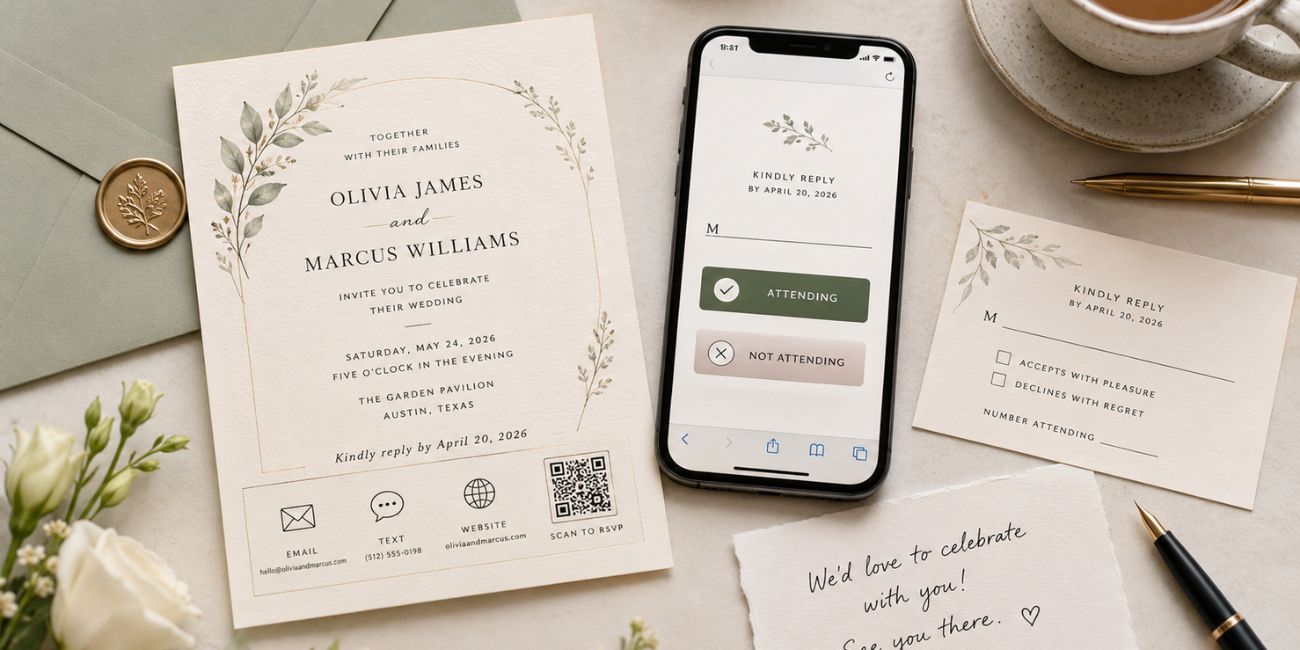
Always read the invitation carefully first. Most invitations include instructions on how to respond. It can be a phone number, an email address, RSVP card, website link, or a QR code.
Choose the reply method the host provided. If you are invited to answer through a website, use that website. If the invitation asks you to send a text message, send one. This helps the host keep track of replies in one place.
Your RSVP message does not have to be long. Include your name, say whether you are attending, and mention your guest only if the invitation allows an extra guest. This is enough for most events.
If it is a formal invitation, you can write, “Thank you for inviting me, I would be pleased to attend.” If it is an informal invitation, “Thank you for the invitation, I’ll be there” is acceptable. If you cannot go, you can say, “Thank you for inviting me. Sorry, I can’t make it.”
If your answer is no, it is not necessary to explain your whole reason. Often, a short and polite response is enough. What the host mainly needs is a clear answer.
What Does “RSVP By” Mean?
“RSVP by” means the host wants your response by that date. When the invitation states “RSVP by July 5,” try to send your response on July 5 or earlier.
This is not just a pretty date written on the card. The host may need to confirm food, seating, tables, tickets, or the final guest list. This date is more important for weddings and other formal events.
If you already know your answer, reply early. There is no need to wait until the last day. A quick response can help the host avoid sending reminder messages.
If you missed the RSVP deadline, still respond as soon as possible. You can say, “I’m sorry I took so long to get back to you, but I wanted to confirm I’m able to attend.” Being late is not ideal, but no reply at all is worse.
Helpful RSVP Examples You Can Use
There are times when people know what RSVP means, but they are still not sure what to write. That is normal. You do not need perfect words, it is more important to be clear and polite.
| Situation | Reply Example |
|---|---|
| You are attending | Thank you for inviting me. I shall be glad to come. |
| You cannot attend | Thank you for the invitation. Sorry, I can’t make it. |
| Casual yes | Thanks for inviting me. I’ll be there. |
| Casual no | Thanks for inviting me, but I can’t come this time. |
| Asking about a guest | Thanks for the invite. Is it okay if I bring a guest? |
| Late reply | Sorry for the late reply. I wanted to confirm that I can attend. |
These answers can be changed according to the occasion. A wedding reply can sound a little more polite, and a birthday reply can be more relaxed. The key is that your answer should not leave the host guessing.
What Does “Regrets Only” Mean on an Invitation?
“Regrets only” is different from a normal RSVP. It simply means you should respond only if you are unable to attend. If you do not respond, the host will assume that you are coming.
For instance, an office lunch invitation might read, “Regrets only by Friday.” That means you send a message only if you cannot attend. Usually, there is no need to respond if you are going.
This language is often used for office events, school events, group lunches, or general gatherings. It stops the host from receiving too many yes responses.
However, read the invitation carefully. If it says RSVP, respond with either yes or no. If it says regrets only, then only answer if your answer is no. Small wording, but it changes what your response needs to be.
Common RSVP Mistakes People Make
Not answering the RSVP is the biggest mistake. Some people see the invitation and think they will respond later, but then they forget. It happens, but it makes planning more difficult for the host.
Another common mistake is missing the response date. If an invitation gives a date, please try to follow it. The host might already be setting up food, seating, or final counts.
Do not bring extra guests unless you are invited to do so. Usually, if only your name is on the invite, it means the invitation is only for you. If you want to bring someone, ask first and do not assume.
Please tell the host if your plans change. Maybe you already said yes, but now you cannot go. That is fine, things change, but a quick message is better than no message.
Basic RSVP Etiquette Tips for Guests
RSVPs are not too hard to handle. The simple rule is this: respond on time, respond clearly, and respond according to the invitation. Usually that is all that is needed.
If someone invites only you, respond for yourself only. If it says “and guest,” then you can bring one guest. If your family members are named on the invitation, respond with the number of people who will attend.
For a wedding invitation, do not assume kids are included unless it is written on the invite or the invite clearly says “family.” Some weddings include children and some do not. It is better to ask than to guess.
You can ask in a simple way, such as, “Thank you for the invite, I just wanted to check if kids are included.” That is better than turning up with extra people and causing a problem.
FAQs About RSVP on Invitations
What is the meaning of RSVP in layman’s terms?
RSVP means the host expects a reply. It is a request asking whether or not you will be going to the event.
Does RSVP mean I have to respond?
Yes, if an invitation includes RSVP, you should send a response. Even if you cannot attend, it is still important to answer, so the host knows.
Is RSVP a yes only?
No, RSVP is not yes only. It means you have to respond with your answer, either yes or no.
What is the meaning of RSVP by a date?
RSVP by a date means the host wants to hear from you by that date. If it says RSVP by July 1, the response should be given on or before July 1.
Is it rude not to RSVP?
Yes, it may be seen as rude because the host needs your response for planning. A short response is better than no response.
How do you respond to an RSVP invitation?
You do not have to overcomplicate it. You can say, “Thank you for inviting me, I will be pleased to attend.” If you cannot attend, say, “Thank you for inviting me, but I can’t attend.”
Final Thoughts
If you receive an invitation, RSVP means the host is expecting a response. It is not a difficult word to understand. Simply let the host know if you will be attending or not.
An RSVP is useful for food, seating, space, headcount, and the overall event planning. So next time you see RSVP on a wedding card, dinner invite, birthday invitation, or office event message, do not ignore it. If possible, give a clear response before the deadline.
Have you ever seen an invitation that said “RSVP by” or “regrets only” and felt confused? Share which wording made you stop and think.

