
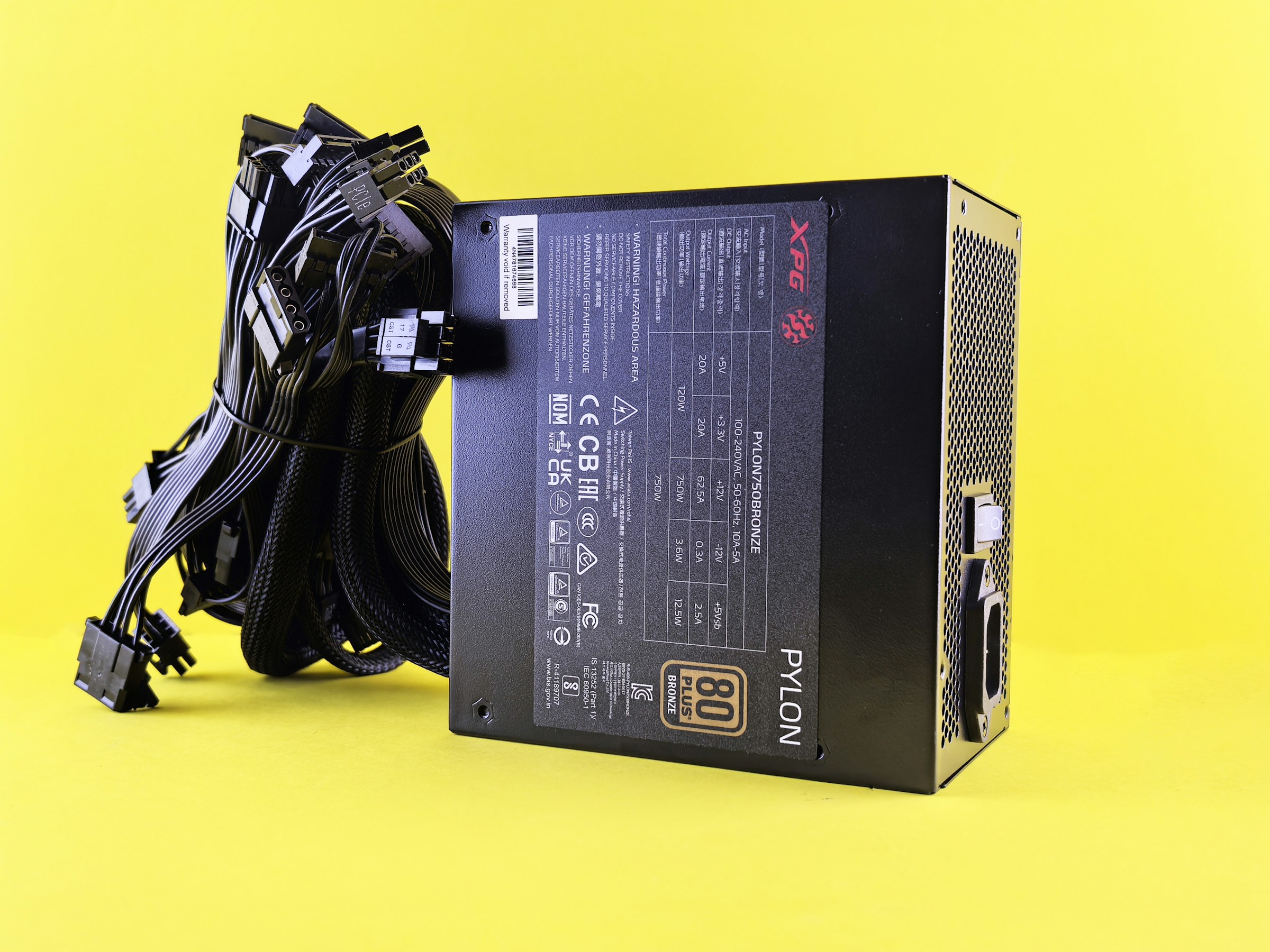
A PC PSU for an AI workstation is a tool that support powerful CPU, multi GPU, RAM, and storage devices for stable performance. An AI workstation typically runs power-hungry tasks for machine learning and AI options testing, which is why it uses powerful components to get rock-solid performance. To support these tasks, PSU must have high power, 80 PLUS® Titanium or Platinum efficiency level, a stable 12V line, and protection against peak loads. These are necessary options because modern graphics processors for AI can consume hundreds of watts each. And the PSU you use must support their needs and have an extra power reserve.
How do the power requirements of AI workstations differ from traditional PCs in 2026?
In the following ways:
- Higher peak loads. Modern GPUs for AI consume 400–600W each, while a typical graphics card consumes 150–300 W. That’s a big difference that must be considered when choosing the PC power supplies.
- Multiple GPUs are supported simultaneously. AI stations often use from 2 to 8 graphics processors. Such a configuration requires extra PCIe slots and more PSU power for power-hungry CPU requirements.
- Increased need for voltage stability.
- More high-performance components. For example, GPUs, CPUs with multiple cores, lots of DDR5/DDR6 RAM, and NVMe SSDs. However, the most important factor is the GPU, and its number in the system.
- Energy efficiency and 80 PLUS® Titanium/Platinum certifications.
- The ability to connect additional GPUs or storage devices without replacing the PSU.
How does a PSU provide stable power to high-performance GPUs and CPUs?
This is achieved thanks to the core technical mechanism every other PSU must have.
- The PSU holds precise 12V, 5V, and 3.3V lines so that PC components receive constant voltage even under peak loads.
- Capacitors and other components eliminate power supply fluctuations and noise. This spec is highly critical for GPUs and CPUs while performing complex calculations.
- Power is delivered evenly to the CPU, GPU, and other components through separate channels, preventing overload.
- Protections (OVP, OCP, SCP) set against overvoltage, short circuit, and overload to prevent component damage.
- 80 PLUS® high efficiency ensures minimal energy loss and stable operation.
What are the implications of ATX 3.1 and PCIe 5.1 in power system design for AI workstations?
The ATX 3.1 and PCIe 5.1 standards in 2026 support the most powerful GPUs and CPUs in AI workstations, providing their high productivity and update flexibility. Here is how they work:
- PCIe 5.1 allows modern GPUs to consume up to 600W and more. The ATX 3.1 defines new connectors for safe and stable connections.
- ATX 3.1 provides improved regulation and power channels for GPUs, which are critical for energy-intensive AI computing.
- The new standard is backward compatible with previous PCIe cards and allows for easy system upgrades without replacing the PSU.
- ATX 3.1, working together with the PCIe 5.1 standard, reduces energy loss and heat dissipation during high loads.
Which PSUs are best suited for AI workstations?
Seasonic offers the following AI workstation power supplies that provide high performance and stable power delivery to all PC components.
- Seasonic PRIME TX-1600 ATX 3.1. The fully modular power supply provides the top of the line effectivity level, a stable power supply for powerful GPUs/CPUs. The PSU supports modern standards (ATX 3.1, PCIe 5.1) and is an excellent choice for AI configurations with heavy loads.
- Seasonic PRIME PX-2200 ATX 3.1. More powerful PSU with 80 PLUS® Platinum certification and ATX 3.1/PCIe 5.1 standards support. Suitable for AI systems with multiple high-performance GPUs or future upgrades.
How do modern PSUs for AI workstations manage short-term voltage surges?
Modern PSUs for AI workstations manage short-term voltage spikes thanks to active output voltage regulation, which quickly maintains stable 12V, 5V, and 3.3V. High-volume capacitors keepenergy and smooth out short spikes or dips in voltage, protecting sensitive AI workstation components. The OVP, OCP, and UVP protection systems automatically block overvoltage, overload, or short circuit by shutting down the PSU in critical situations. Furthermore, power distribution across separate channels stabilizes power to the CPU, GPU, and other components. Thus, peak loads on one part of the system don’t affect others.
Cooling, thermal protection, and noise reduction in AI workstations
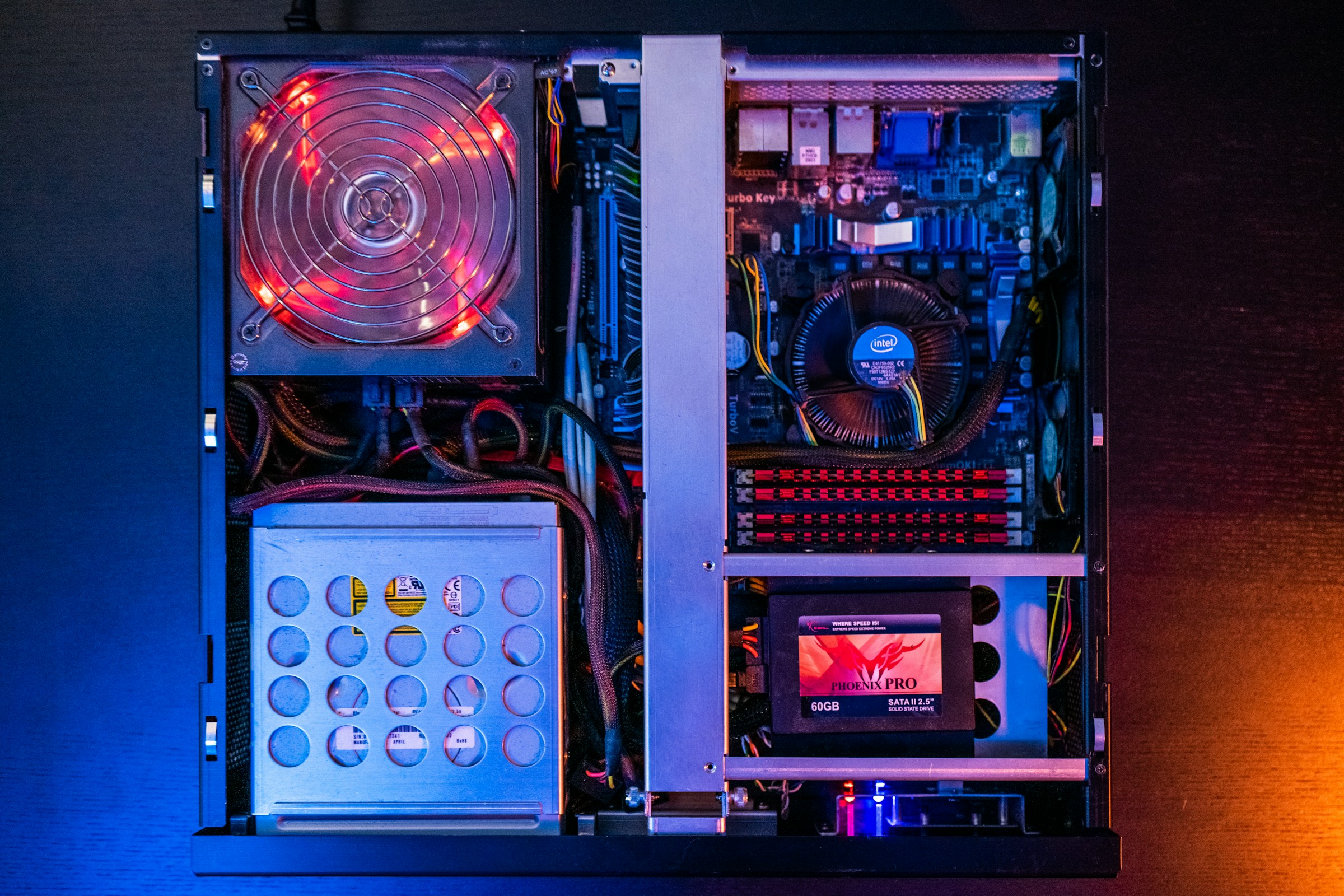
The cooling system in AI workstations leverages powerful air coolers, liquid, or hybrid solutions to push heat out from components and keep the system stable performance. Thermal protection automatically reduces frequencies or shuts down components when overheating, preventing component damage and reducing their longevity.
For noise reduction, AI workstations use noise-absorbing housings, adaptive speed fans, and optimized airflows. They help maintain low noise levels even under maximum load, during long model training sessions or lengthy calculations.
Conclusion
In 2026, AI workstations dictate new rules and requirements for power supplies, which manufacturers listen to and realize in practice. Since such builds run tasks that require much more power than a powerful PC game, the PSU must be a real powerhouse to handle all the tasks it needs. New ATX 3.1 & PCIe 5.1standards, protection sets, graphic processors, and multi-GPU power needs form the new requirements for a top-notch PSU that is capable to power AI workstations in 2026.

